Hi there! Welcome to another blog post on Tech Tapestry by Nabira. If you’re curious about how neural networks work, you’ve come to the right place. Neural networks are the foundation of modern deep learning, powering everything from image recognition to language translation. But how do they actually work? Let’s break it down step by step!
What is a Neural Network?
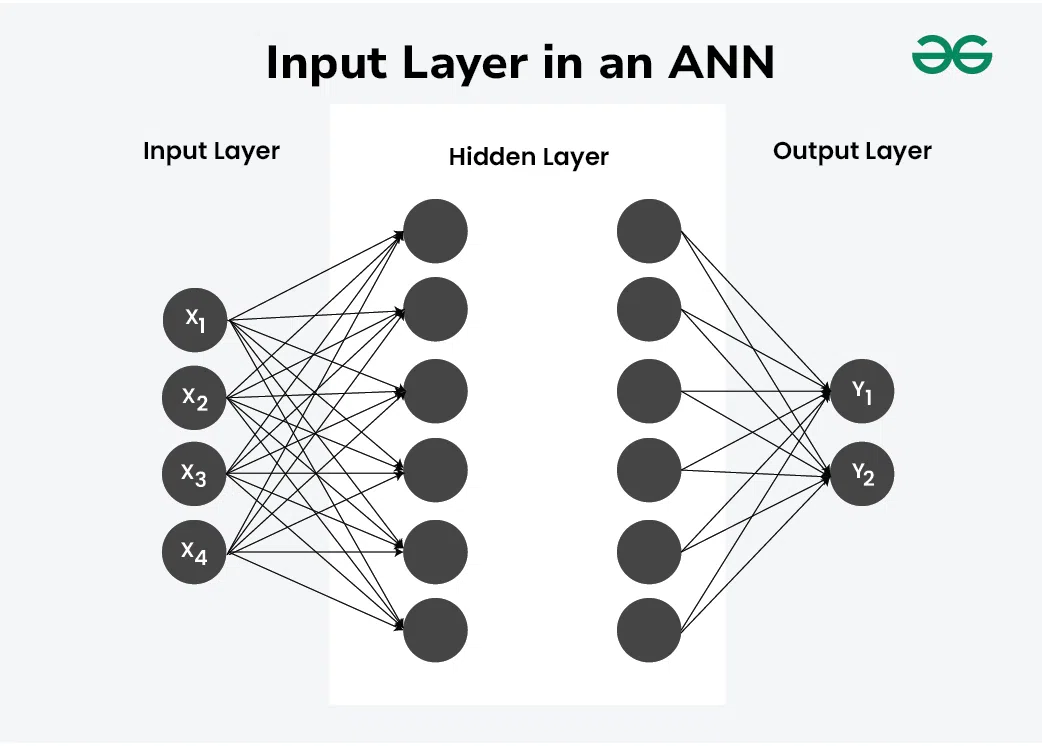
A neural network is a computational model inspired by the human brain. It’s designed to recognize patterns and make decisions based on data. At its core, a neural network is made up of layers of interconnected nodes (also called neurons). These nodes work together to process input data, learn patterns, and produce outputs.
Think of a neural network as a black box that takes in data (like an image or text), processes it through multiple layers, and spits out a result (like a prediction or classification). But what’s happening inside that black box? Let’s dive in!
The Structure of a Neural Network
1. Input Layer:
This is where the network receives its input data. Each node in the input layer represents a feature of the data. For example, if you’re analyzing an image, each node might represent a pixel.
2. Hidden Layers:
These are the layers between the input and output layers. They’re called "hidden" because their outputs aren’t directly observable. Each hidden layer consists of multiple nodes that process the input data and pass it on to the next layer.
3. Output Layer:
This is where the final result is produced. The number of nodes in the output layer depends on the task. For example, in a binary classification problem, there might be one node (for yes/no), while in a multi-class problem, there might be multiple nodes (one for each class).
How Do Nodes Work?
Weighted Sum:
The node takes in inputs from the previous layer, multiplies each input by a weight, and adds them up. It also adds a bias term to adjust the output. The formula is as follows w represents weights and x represents inputs:
Activation Function:
The weighted sum is then passed through an activation function, which introduces non-linearity into the network. This allows the network to learn complex patterns. Common activation functions include ReLU, Sigmoid and Tanh as we mentioned in our
previous article.
Output:
The result of the activation function is the node’s output, which is passed on to the next layer.
The Flow of Data
Here’s how data flows through a neural network:
1. Forward Propagation:
Input data is fed into the input layer. The data is processed through the hidden layers, with each node performing its weighted sum and activation function. The final output is produced by the output layer.
2. Learning from Mistakes:
After forward propagation, the network compares its output to the actual target value using a
loss function (e.g., Mean Squared Error for regression or Cross-Entropy Loss for classification). The loss function measures how far off the prediction is from the truth. The goal is to minimize this loss.
3. Backpropagation:
The network calculates the gradient of the loss function with respect to each weight and bias. This tells the network how much to adjust its parameters to reduce the loss.
4. Optimization:
An
optimizer (like Gradient Descent or Adam) updates the weights and biases based on the gradients calculated during backpropagation. This process is repeated over many iterations to improve the network’s performance.
A Simple Example
Imagine you’re building a neural network to classify handwritten digits (0–9). Here’s how it works:
- The input layer takes in the pixel values of the image.
- Hidden layers process the pixels, detecting edges, curves, and shapes.
- The output layer produces probabilities for each digit (0–9).
- The network predicts the digit with the highest probability.
In Conclusion
In this article, we’ve covered the basics of neural networks, including their structure, how nodes work, and the flow of data. Whether you’re building a model to recognize faces, translate languages, or predict stock prices, understanding how neural networks work is the first step toward mastering deep learning.
But there’s so much more to explore! In the next article, we’ll dive deeper into loss functions and optimizers—the key components that help neural networks learn from their mistakes and improve over time. We’ll also explore advanced concepts like learning rates, regularization, and more.
Hope you enjoyed this article! Stay tuned for more deep dives into the world of AI and machine learning. Feel free to leave any ideas for future articles in the comments below!



Comments
Post a Comment